


Stave Churches In Norway
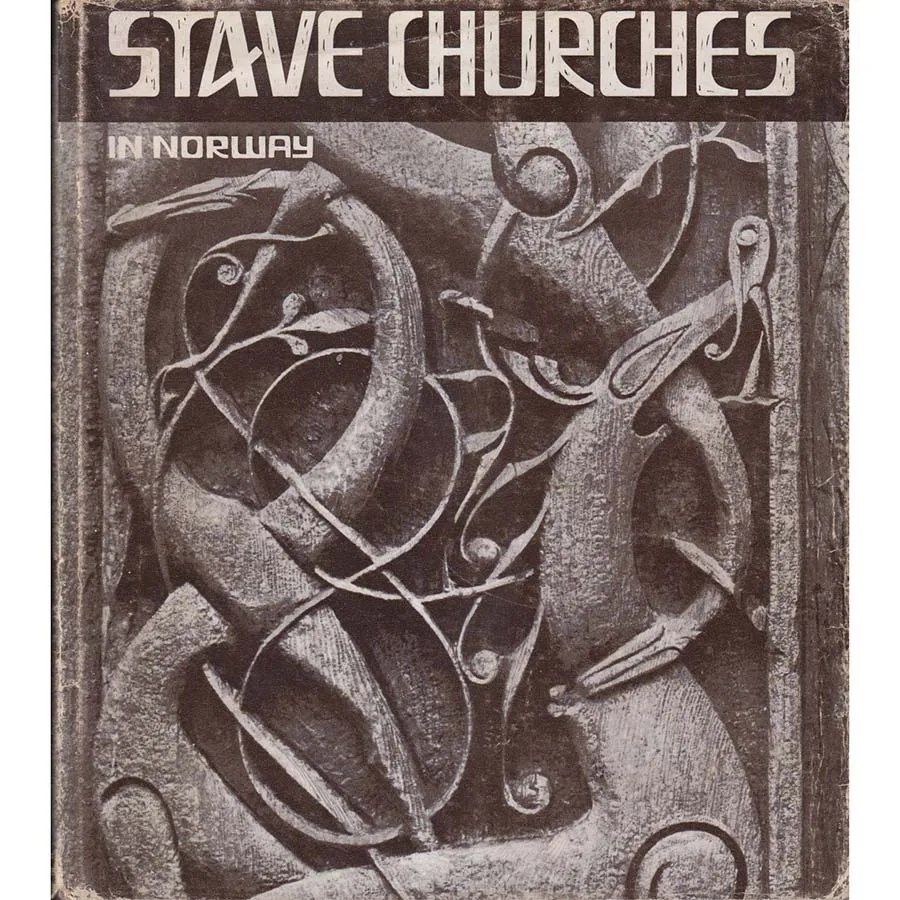
Publisher: Rudolf Steiner Press
Format: Hardback
ISBN: 0854402055
Stave Churches in Norway (1969) by Dan Lindholm and Walther Roggenkamp – Rudolf Steiner Press
Some churches are built to dominate a skyline.
Some are built to impress a bishop.
And some look as though they have been quietly standing in a Norwegian valley for eight hundred years waiting for someone to notice how extraordinary they are.
Stave Churches in Norway, by Dan Lindholm and Walther Roggenkamp and published by Rudolf Steiner Press in 1969, explores one of the most distinctive forms of medieval architecture in Europe: Norway’s remarkable wooden stave churches.
And wooden really does mean wooden.
Not “timber-framed with a bit of stone underneath”.
Wood.
Posts, beams, walls, roofs, carvings, joints and enough structural ingenuity to make the average flat-pack wardrobe feel deeply inadequate.
The stave churches were built during the Middle Ages using sophisticated timber construction techniques, with upright posts — or staves — forming the main structural framework. The result was a type of building that managed to be practical, monumental, mysterious and slightly fantastical all at once.
They have steep roofs.
Dark timber.
Elaborate portals.
Carved decoration.
And, in some cases, the general appearance of somewhere a Viking might attend church if he had only recently agreed to stop setting things on fire.
This book looks at the churches not merely as curiosities, but as works of architecture, craftsmanship and symbolism.
That matters, because they sit at a fascinating point in Scandinavian history, where older Norse traditions met Christianity and somehow produced buildings that feel both recognisably ecclesiastical and unmistakably northern.
You can see Christian imagery alongside decorative forms that seem to belong to a much older visual world.
Dragons creep into carvings.
Interlaced patterns twist around doorways.
Roofs rise in layers.
And everything suggests that the people responsible for these buildings were not particularly interested in producing anything bland.
The stave churches are also extraordinary survivors.
Wooden buildings are not generally famous for lasting the best part of a millennium.
Wood rots.
Wood burns.
Wood gets modified.
Wood gets demolished by someone in the nineteenth century who decides a nice sensible replacement would be better.
Yet a number of these churches endured.
That gives them an almost improbable quality.
They are architectural survivors from a period when Europe was changing rapidly, religions were shifting, kings were consolidating power and somebody somewhere was still trying to work out how many dragons could reasonably be carved around a church doorway before the clergy objected.
Lindholm and Roggenkamp approach the subject with the seriousness and thoughtfulness you would expect from Rudolf Steiner Press, giving attention not only to construction but also to the spiritual and artistic significance of the buildings.
This is therefore not merely a picture book of attractive Norwegian churches.
It is an attempt to understand what they meant.
How they were designed.
Why they looked the way they did.
And how architectural form, craftsmanship and belief came together in timber.
There is something particularly satisfying about a book like this from 1969.
It comes from an era when specialist books were quite happy to devote themselves entirely to one very specific subject without worrying whether it would appeal to everybody.
Norwegian medieval wooden churches?
Excellent.
Let us have a whole book.
No lifestyle crossover required.
No chapter called “What Stave Churches Can Teach Us About Modern Living”.
Just stave churches.
Properly.
This copy is in Good condition, making it a pleasing vintage example for anyone interested in architecture, Scandinavia, medieval history, church design, woodwork or the odd and wonderful places where religion and craftsmanship overlap.
Ideal for historians, architects, travellers, church enthusiasts, woodworkers or anyone who has ever looked at a medieval building and thought, “Yes, but how did they actually make that?”
Sold by Crappy Old Books, where structural timber is respected, dragons are tolerated, and all buildings are expected to remain standing for at least as long as the shelves.
ISBN: 0854402055
Condition: Good
Keep browsing: See more Architecture books Other books by Dan Lindholm and Walther Roggenkamp
